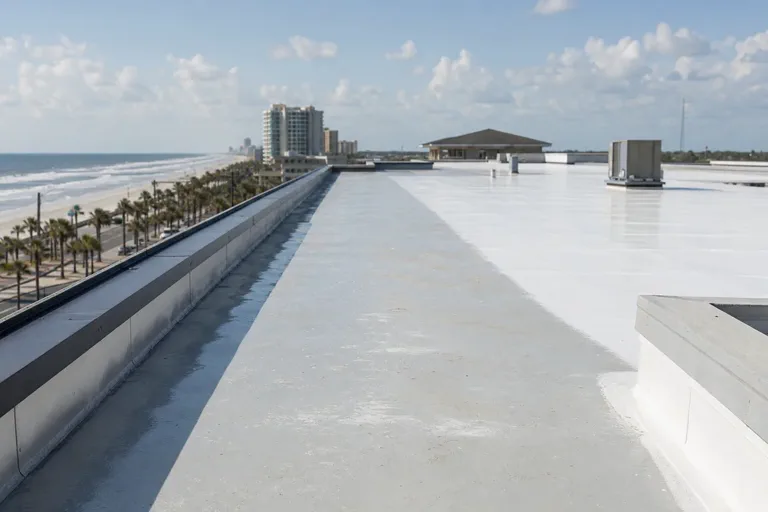
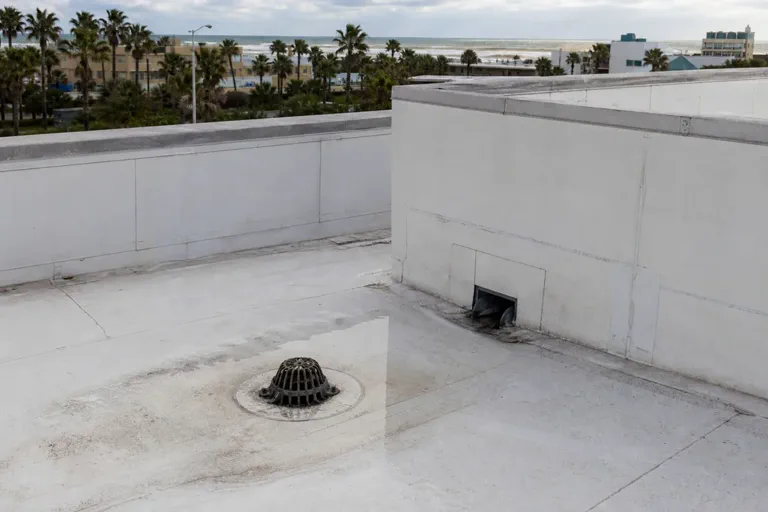
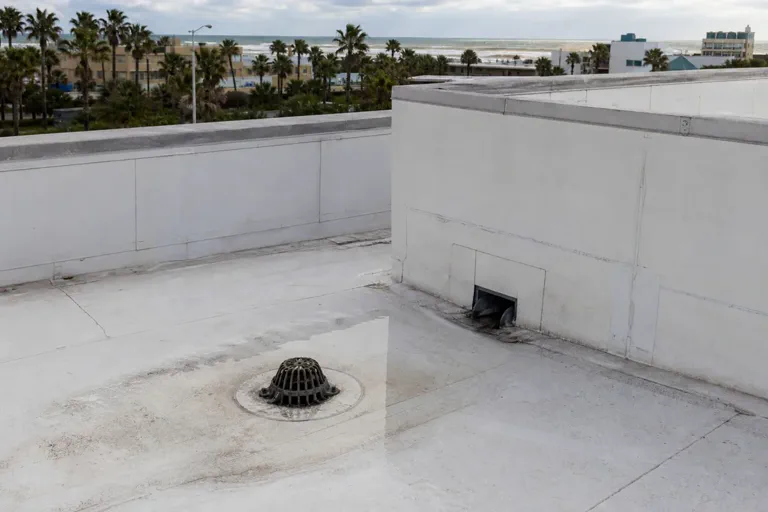
Illustrative commercial flat roof on a coastal Florida building

Daytona Beach, FL Commercial Roofing

Daytona Beach Commercial Roofing, Flat Roof Repair & Replacement

Commercial roof problems in Daytona Beach and nearby Volusia County properties often show up after coastal wind, summer downpours, salt air exposure, rooftop equipment service, or years of ponding water on low-slope roof areas. Building owners, property managers, facility teams, churches, retail centers, warehouses, offices, restaurants, multifamily properties, and industrial operators need practical help with commercial roof repair, flat roof replacement, TPO and PVC membrane issues, coatings, drainage problems, storm-related leaks, and maintenance planning.

  • Flat roof leak and membrane issue review for commercial buildings
  • TPO, PVC, EPDM, modified bitumen, metal, and coating considerations
  • Help for property managers, warehouses, retail centers, churches, offices, and industrial properties
  • Storm damage, ponding water, HVAC curb, drain, scupper, flashing, and roof penetration concerns
  • Daytona Beach and Volusia County commercial roofing support, including Ormond Beach, Port Orange, New Smyrna Beach, DeLand, and Palm Coast
Commercial RepairsLeak tracing and repair planning
Roof ReplacementReplacement scope and budgeting
Flat Roof SystemsLow-slope and membrane roofs
Daytona Beach / Volusia CountyDaytona Beach and nearby Volusia County

Commercial Roofing Help

Commercial Roof Problems We Can Help You Sort Out

You do not need to know whether the issue is an open seam, failed flashing detail, clogged drain, punctured membrane, rooftop unit curb, parapet wall, scupper, skylight, pipe penetration, previous patch area, or low spot that holds water before you reach out. Start with what you are seeing inside or on the roof. The follow-up can sort out whether the problem looks isolated, recurring, drainage-related, storm-related, equipment-related, or part of a larger roof system failure.

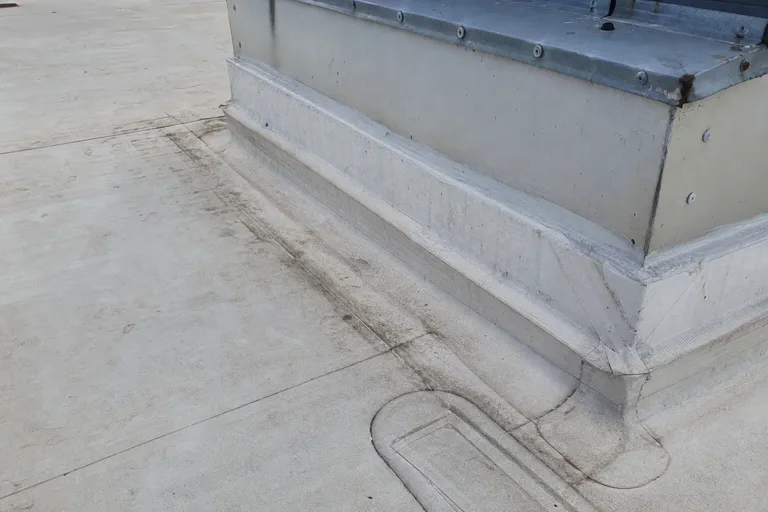
Illustrative commercial roof repair seam and curb detail

Commercial Roof Repair

Commercial roof repair starts with the leak pattern, not the ceiling stain alone. Water can enter at an HVAC curb, open lap, pipe penetration, skylight, coping cap, drain bowl, scupper, expansion joint, or old patch, then travel along insulation boards or low-slope surfaces before it appears inside. Repair may make sense when the issue is localized, the surrounding membrane still has useful life, and there is no sign of widespread wet insulation or system-wide seam failure.

Explore Full Service Details
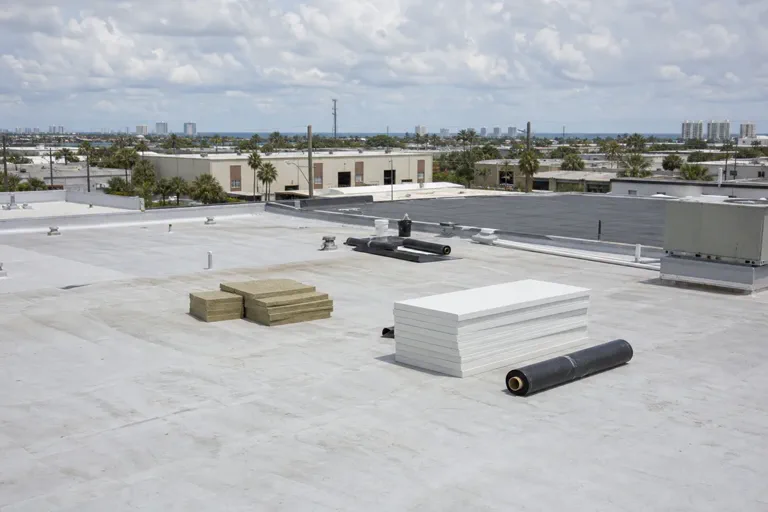
Illustrative commercial roof replacement planning scene

Commercial Roof Replacement

Commercial roof replacement may need to be considered when the failure is no longer isolated. Chronic recurring leaks, saturated insulation, widespread seam failure, severe membrane deterioration, major ponding, structural or deck concerns, rusted metal panels, and multiple failed repair areas can make another patch a short-term expense instead of a real fix. After you call, the roof can be reviewed for access, business occupancy, tenant disruption, weather timing, deck condition, and whether coating would only hide a larger problem.

Explore Full Service Details
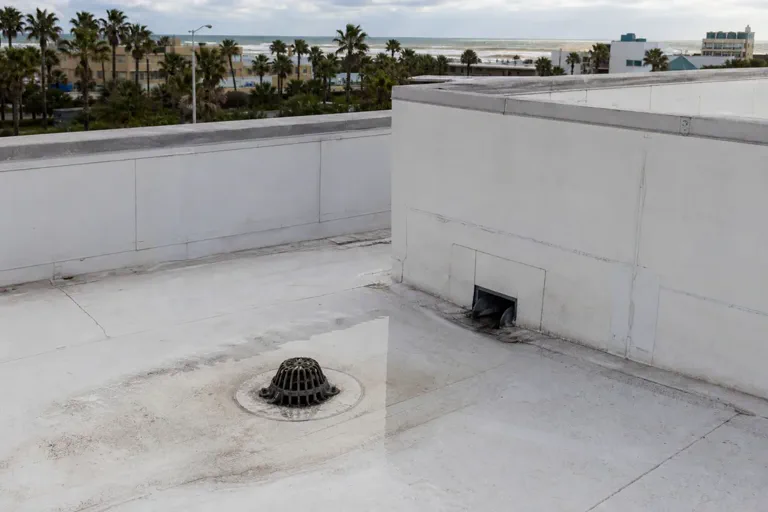
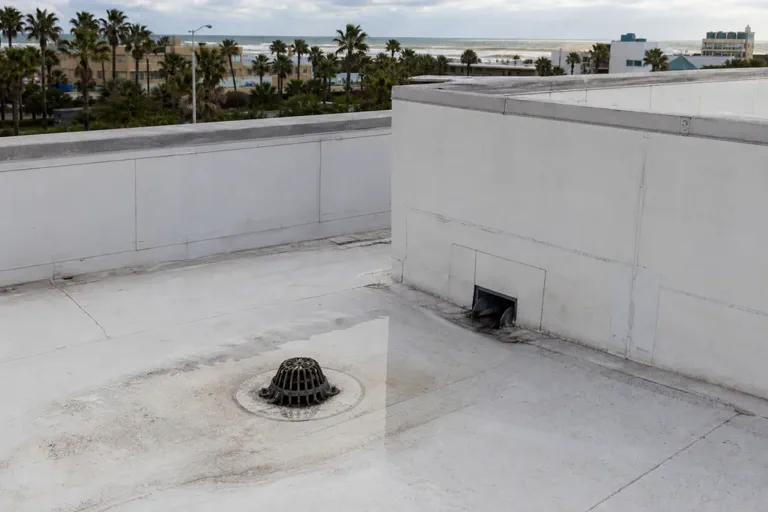
Illustrative low-slope roof drain and ponding water concern

Flat & Low-Slope Roofing

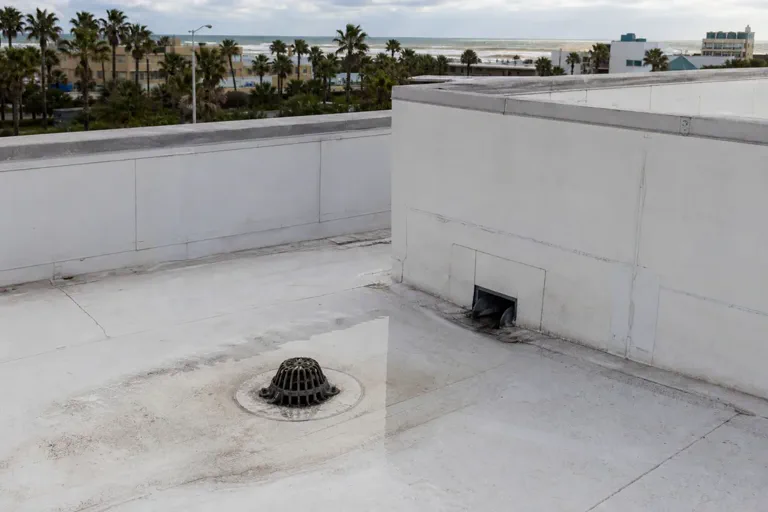
Flat roof repair in Daytona Beach often comes down to drainage, seams, penetrations, and water travel. Low-slope roofs can hold water around internal drains, gutters, scuppers, low spots, parapet walls, and foot-traffic paths. You can reach out with a simple description of when the leak appears, such as during wind-driven rain, hours after rain, or only after heavy summer storms. If you have noticed membrane punctures, open seams, failed flashing, or rooftop equipment near the affected area, that can be discussed during the follow-up call.

Explore Full Service Details
Illustrative TPO and PVC membrane roofing detail

TPO & PVC Membrane Roofing

TPO and PVC roofs rely on sound heat-welded seams, tight flashing, clean laps, secure terminations, and careful detailing around HVAC curbs, pipe penetrations, drains, parapets, and rooftop equipment. TPO can suffer punctures, open seams, foot-traffic damage, membrane movement, ponding areas, and flashing failures. PVC is often considered around restaurants or buildings with grease or chemical exposure, but drains, seams, exhaust areas, and equipment transitions still need close review before repair, coating, or replacement is discussed.

Explore Full Service Details
Illustrative commercial roof coating surface

Commercial Roof Coatings & Restoration

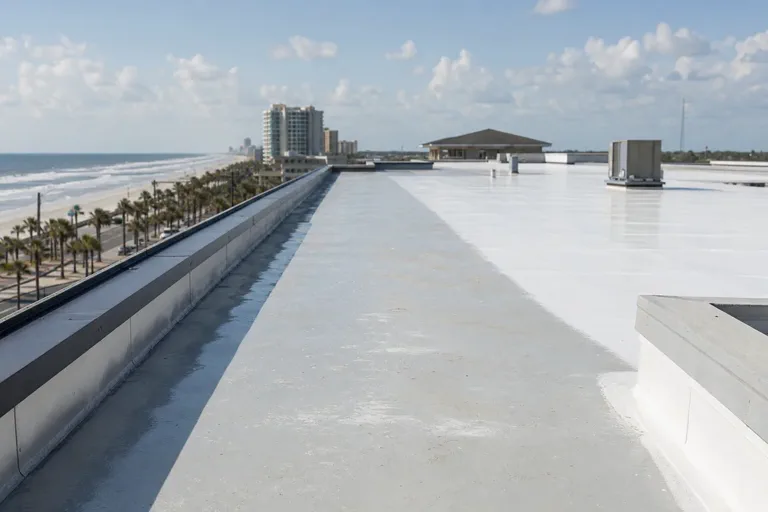
Commercial roof coatings can extend the life of the right roof, but they do not rescue every flat roof. Silicone and acrylic coatings usually require cleaning, dry conditions, adhesion testing, seam reinforcement, penetration repairs, flashing work, and moisture review before application. Coating may make sense when the roof is mostly intact, leaks are limited and repairable, drainage is acceptable, and wet insulation is not widespread. Replacement may be smarter when the roof has severe movement, chronic leaks, saturated insulation, or broad membrane failure.

Explore Full Service Details
Illustrative commercial roof maintenance details around rooftop equipment

Preventive Roof Maintenance

Commercial roof maintenance is usually about finding small failure points before they become interior damage. Drains, scuppers, gutters, seams, laps, pitch pans, parapet walls, coping caps, edge metal, rooftop unit curbs, pipe penetrations, service walk paths, and previous repair areas all need attention. Property managers can start with a plain description of tenant complaints, ceiling stains, roof access constraints, or whether leaks happen during wind-driven rain, after heavy storms, or around specific rooftop equipment. You do not need to climb onto the roof, identify the system, or prepare a complete scope before asking for help.

Explore Full Service Details

Commercial Roof Systems

Roof Systems That May Need Repair, Coating, or Replacement

Commercial roofs in Daytona Beach and Volusia County commercial roofs deal with intense UV exposure, salt air, humidity, heavy summer rain, tropical weather systems, wind-driven rain, rooftop equipment, and drainage challenges on low-slope buildings. Warehouses, older retail centers, churches, medical offices, restaurants, multifamily properties, schools, and industrial buildings may share similar roof shapes, but TPO, PVC, EPDM, modified bitumen, built-up roofing, metal panels, and coating systems fail in different ways.

Illustrative single-ply membrane roof system detail

TPO & PVC Membrane Systems

TPO roofing problems often involve heat-welded seams, punctures, membrane movement, open laps, failed flashing, HVAC curbs, pipe penetrations, ponding water, and foot-traffic damage. PVC has similar seam and flashing concerns, with added attention around restaurants, kitchen exhaust, grease exposure, and chemical contact. EPDM roofs may show seam separation, punctures, aging rubber membrane, shrinkage, ballast movement, flashing failures, and ponding areas. The roof system, age, attachment, insulation condition, previous repairs, and drainage pattern all affect whether repair, coating, recover, or replacement makes sense.

Illustrative modified bitumen and built-up roof detail

Modified Bitumen and Built-Up Roofing

Modified bitumen roofs can develop blistering, cracking, granule loss, open laps, punctures, and flashing deterioration as asphalt-based materials age under Coastal Central Florida sun. Built-up roofing may show alligatoring, gravel displacement, splits, recurring leak areas, ponding water, flashing failure, and saturated insulation risk. A useful first call can start with where water appears inside, whether the same area has been patched before if you know, whether water sits after rain, and whether roof drains, parapets, equipment curbs, or expansion joints seem nearby.

Illustrative commercial metal roofing seam and fastener area

Commercial Metal Roofing

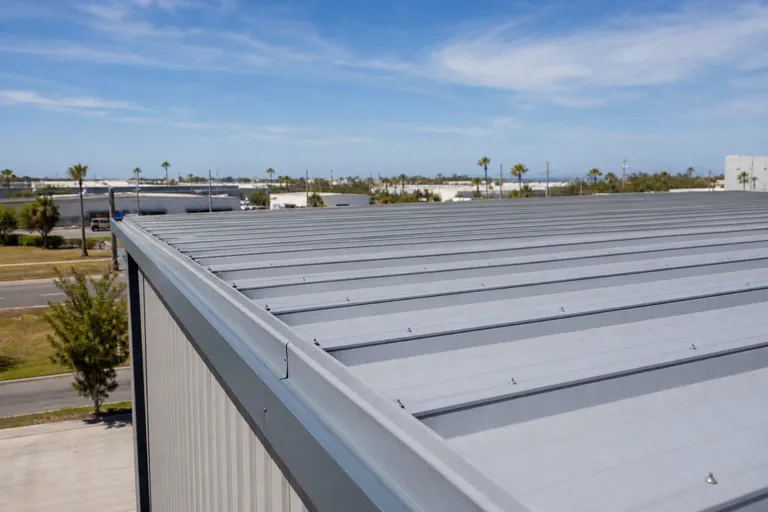
Metal commercial roofs often leak at fastener back-out, panel movement, seam separation, rust, failed sealants, penetrations, skylights, roof-to-wall transitions, equipment supports, and areas where expansion and contraction have stressed old repairs. A metal roof may need targeted panel repair, fastener work, sealant replacement, flashing correction, rust treatment, or a coating system after prep. The right recommendation depends on whether the leak source is isolated or tied to broader panel, seam, or substrate deterioration.

Illustrative elastomeric coating candidate roof surface

Silicone & Elastomeric Roof Coatings

Silicone and acrylic coatings can be useful on roofs that are still good candidates for restoration. They require surface preparation, cleaning, adhesion review, reinforcement at seams and penetrations, flashing repairs, and moisture evaluation. Coating is not a miracle fix for saturated insulation, severe ponding, active system-wide leaks, unstable substrates, or roofs past useful life. For Daytona Beach commercial buildings, UV exposure, humidity, summer rain, and drainage patterns make prep and candidacy more important than the coating product name.

Roof Systems and Materials

Why Commercial Roofing Materials Fail Differently

Commercial flat roofing is not one material. The repair approach changes when the roof is TPO, PVC, EPDM rubber, modified bitumen, built-up roofing, standing seam metal, exposed-fastener metal, or a coated restoration system. The material matters because seams, fasteners, flashings, drains, rooftop equipment, and wet insulation risk all fail differently.

TPO Roofing Systems

TPO roofing is common on flat and low-slope commercial buildings because the reflective membrane can work well in Coastal Central Florida heat when the seams and details are sound. Typical problems include open heat-welded seams, punctures, membrane movement, failed flashing, foot-traffic damage, ponding water, and leaks around HVAC curbs, drains, pipe penetrations, and parapet walls.

PVC Roofing Membrane

PVC roofing is often considered for restaurants and buildings where grease, chemical exposure, or rooftop exhaust may be part of the roof environment. The system still needs careful review at seams, drains, flashing transitions, kitchen exhaust areas, rooftop equipment, wall terminations, and membrane punctures before repair, coating, or replacement options are discussed.

EPDM Rubber Roofing

EPDM rubber roofs can develop seam separation, punctures, shrinkage, aging membrane surfaces, ballast displacement, ponding areas, and flashing failures. On older commercial buildings, an EPDM leak may start at a lap, wall detail, drain, curb, or previous repair and travel under the membrane before it appears inside the building.

Modified Bitumen Roofing

Modified bitumen is an asphalt-based commercial roofing material that may show blistering, cracking, granule loss, open laps, punctures, and flashing deterioration as it ages. Repair may be practical for isolated damage, but repeated leaks, widespread surface deterioration, or wet insulation can move the next step toward restoration or replacement planning.

Built-Up Roofing / BUR

Built-up roofing systems can show alligatoring, gravel displacement, splits, saturated insulation risk, flashing failure, ponding water, and recurring leak areas. A BUR roof should be reviewed for drainage paths, roof age, previous patches, soft spots, parapet details, and whether the leak is isolated or part of broader system fatigue.

Commercial Metal Roofing

Metal roofs can leak at fastener back-out, panel movement, seam separation, rust, failed sealants, penetrations, skylights, roof-to-wall transitions, ridge details, and equipment supports. Expansion and contraction matter on metal roofs, so the review should separate a simple sealant issue from broader panel, fastener, or substrate problems.

Silicone & Elastomeric Roof Coatings

Silicone and acrylic coatings can be useful restoration materials when the roof is a good candidate, but coating is not a substitute for proper repair. Seams, flashing, penetrations, drains, rust, adhesion, cleaning, and moisture conditions should be addressed first. Wet insulation, severe ponding, unstable surfaces, or widespread failure can make replacement a better direction.

Flat & Low-Slope Roofing and Maintenance

Flat roof service often includes leak tracing, membrane patching, seam repair, drain and scupper review, curb flashing correction, coating candidacy review, and maintenance planning. For property managers, the key is to document the building type, leak location, timing after rain, affected tenants or inventory, roof access, and any prior repair areas.

Roof Issue Getting Worse?

Call or Request Help When a Roof Problem Is Active

A commercial roof leak can move from a ceiling stain to damaged inventory, tenant disruption, wet insulation, equipment exposure, or customer-area shutdown quickly. If water is active, recurring, or showing up after storms, call or send a short note about what changed. You do not need a full roof scope, roof access notes, or a diagnosis before reaching out.

Request Roof Help

After You Reach Out

What Happens After You Call or Request Roof Help

A proper commercial roof evaluation should connect the interior symptom with the roof system above it. Ceiling stains, tenant complaints, wet inventory, affected rooms, leak timing, wind-driven rain, roof access, visible membrane condition, drainage paths, ponding water, old repairs, rooftop equipment, seams, flashing, and possible saturated insulation all matter.

Daytona Beach commercial roofs face intense sun, salt air, humidity, heavy summer rain, tropical weather systems, and wind-driven water. Rooftop HVAC units create curbs, penetrations, vibration, and service traffic. Retail centers, warehouses, restaurants, churches, schools, offices, multifamily buildings, and industrial properties also have different access rules, tenant concerns, and operating schedules. After you call, the goal is to understand whether the issue sounds isolated, recurring, drainage-related, storm-related, equipment-related, or part of a larger roof system failure.

Built for Commercial Buildings

Written for building owners, property managers, facility teams, churches, retail centers, restaurants, offices, warehouses, multifamily operators, condo associations, schools, and industrial properties.

Repair, Restore, or Replace Scope

Repair may fit an isolated puncture or flashing issue. Coating may fit a dry, stable, repairable roof. Replacement may be needed when leaks, wet insulation, seam failure, ponding, or deterioration are widespread.

Flat Roof System Expertise

Flat roof issues are reviewed through seams, laps, drains, scuppers, HVAC curbs, parapet walls, flashing transitions, ponding water, membrane age, and water travel paths.

You Can Start With a Short Description

If you know the building type, roof system, affected area, urgency, or access limits, share them. If not, a short description of what changed is still enough to start the conversation.

Common Commercial Roof Problems

When Commercial Roof Problems Need Repair, Coating, or Replacement

Active Roof Leaks

A commercial roof leak may show up far from the source because water can travel under membrane layers, along insulation boards, across low-slope surfaces, or through deck openings before entering the building. Interior stains, active dripping, wet ceiling tiles, musty odors, tenant reports, and affected inventory areas should be connected with rooftop features such as seams, drains, HVAC curbs, pipe penetrations, parapet walls, scuppers, skylights, equipment supports, and previous patches.

Ponding Water & Drainage Problems

Ponding water on a flat commercial roof is not just a cosmetic issue. Standing water can accelerate membrane deterioration, stress heat-welded seams and laps, soften insulation, collect debris, expose low spots around internal drains or scuppers, and complicate coating decisions. If the same areas hold water after repeated Daytona Beach storms, the roof should be evaluated for drainage, slope, membrane condition, and possible wet insulation before repair or coating recommendations are made.

Storm and Wind-Driven Rain

Coastal Central Florida weather puts commercial roofs through intense UV, humidity, wind-driven rain, summer downpours, debris, and tropical weather systems. Edge metal, coping caps, parapet walls, rooftop unit curbs, signage supports, scuppers, gutters, skylights, and old repair areas are common trouble spots after storms. Useful notes include what changed after the weather, where water appeared, whether the building is occupied, and whether tenants, inventory, electrical rooms, classrooms, offices, or customer areas were affected.

Aging Roof Systems

An older commercial roof can look acceptable from the ground while seams, flashing, insulation, fasteners, penetrations, and drainage areas are near failure. Repeated patches may buy time, but they can also point to a roof system past useful life. Replacement becomes more likely when failures are widespread, insulation is saturated, seams are failing across broad areas, the membrane is brittle or shrinking, metal panels are corroded, or a coating would only cover a larger problem.

Tenant, Inventory, or Ceiling Complaints

Property managers often hear about roof trouble from tenants, staff, ceiling stains, damp boxes, odors, wet flooring, damaged inventory, or repeated complaints after hard rain. Those details matter because they show business impact. Retail centers may need after-hours scheduling. Warehouses may need inventory protection near loading docks or skylights. Offices may need tenant coordination. Restaurants may have exhaust fans, grease exposure, and frequent roof penetrations. Schools, churches, and daycare facilities may need work planned around occupancy and events.

Replacement Planning & Capital Budgeting

Commercial roofing decisions often connect to a sale, lease, refinance, reserve study, maintenance budget, capital plan, insurance documentation, board approval, or tenant obligation. Multifamily and condo associations may need resident communication, phased work, and reserve planning. Industrial buildings may need operational continuity around equipment-heavy roofs and chemical or heat exposure. The roof review should separate immediate leak control from longer-term roof life before a repair, coating, maintenance, or replacement scope is approved.

Visible Roof Issues

Examples of Commercial Roof Problems You Might Notice

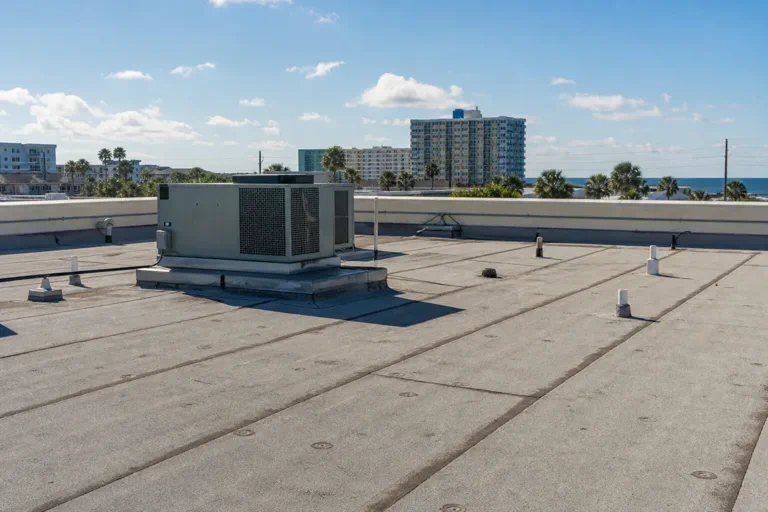
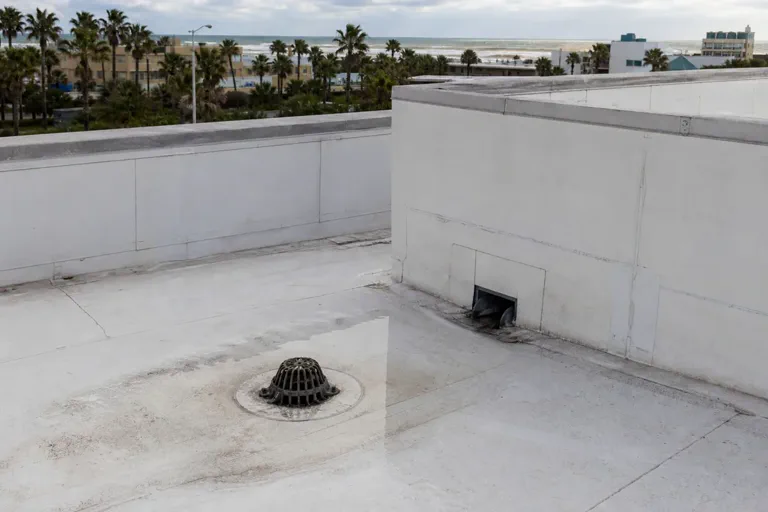
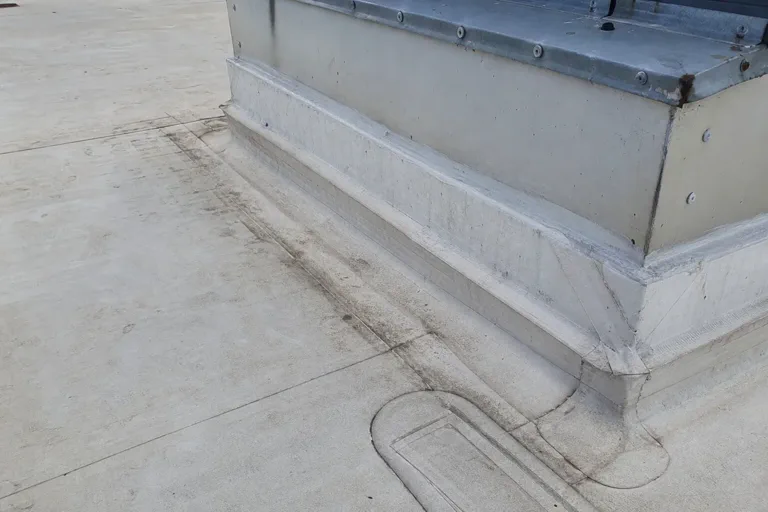
These images are illustrative commercial roof condition examples, not completed project photos. They help show the kinds of roof conditions, details, materials, and planning decisions that may need review before choosing repair, restoration, coating, or replacement.

Illustrative roof condition example on a low-slope commercial roofCondition

Recurring Leak on an Aging Flat Roof

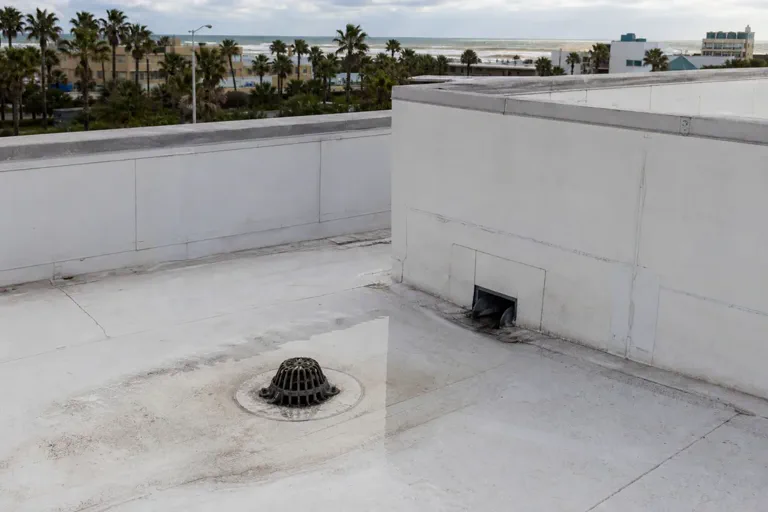
Surface wear, staining, old patches, and ponding near a drain or scupper can point to drainage problems, wet insulation risk, seam stress, or a localized repair area that needs closer review.

Illustrative roof scope example on a low-slope commercial roofScope

Roof Replacement After System Failure

A roof may be considered for restoration only after the membrane is cleaned, seams and penetrations are reinforced, adhesion is checked, and wet insulation or drainage concerns are ruled out.

Illustrative rooftop detail example near penetrations and equipmentDetail

Restoration Candidate After Prep Review

Leaks often start at transitions around HVAC curbs, vents, pipe penetrations, skylights, parapet walls, coping caps, scuppers, edge metal, equipment supports, and previous repair areas.

Illustrative roof review example for repair planningReview

Targeted Repair vs Full Replacement Planning

The recommendation should consider whether the issue is isolated, recurring, storm-related, equipment-related, drainage-related, moisture-related, or part of a larger roof life decision.

Service Area

Commercial Roofing Across Daytona Beach and Volusia County

Daytona Beach is the primary focus, and nearby Volusia County markets have many of the same commercial roof concerns. Ormond Beach, Port Orange, New Smyrna Beach, DeLand, South Daytona, Palm Coast, and Holly Hill include warehouses, older retail centers, churches, medical offices, restaurants, schools, multifamily properties, service buildings, and industrial properties with low-slope roofs, metal systems, rooftop equipment, and drainage issues.

Commercial roofs along major corridors and business districts often deal with access limitations, tenant coordination, rooftop HVAC traffic, delivery schedules, older drainage layouts, and storm exposure. A warehouse near a logistics route, a church with a large low-slope roof, a restaurant with rooftop exhaust equipment, and a condo association with board approvals all need different information before a repair, coating, maintenance, or replacement discussion is useful.

Easy Next Step

You Can Call Before You Know the Roof System

You can call or fill out the form before you know whether the issue is a membrane seam, drain, flashing detail, HVAC curb, parapet wall, or aging roof system. A short description of the interior symptom is enough to start: where water appeared, whether it is active or recurring, and whether tenants, inventory, equipment, classrooms, offices, or customer areas are affected.

For Daytona Beach commercial properties, leak timing matters. Water that appears only during heavy afternoon rain can point to wind-driven entry, flashing transitions, lifted edge details, or drainage overload. Water that appears hours later can suggest ponding, saturated insulation, or a slow travel path through the roof assembly. A stain below an HVAC curb, a wet wall near a parapet, and water below a drain line all call for different roof checks.

If you already have notes about timing, affected areas, or access, they can be discussed later, but they are not required to start. The practical goal is to make the next step easy, not to make you diagnose the roof before asking for help.

Cost and Scope

What Affects Commercial Roof Repair or Replacement Cost

Commercial roof replacement pricing in Daytona Beach depends on the roof system, roof size, access, tear-off needs, insulation condition, deck condition, drainage, rooftop equipment, wind-uplift requirements, staging, and how much work must be coordinated around tenants or operations. As planning context, many flat commercial roof replacements are often discussed in broad per-square-foot ranges, but the final number should come from a roof-specific inspection and written scope.

Single-ply systems such as TPO, PVC, and EPDM are commonly discussed for low-slope commercial roofs because they can provide durable membrane coverage when seams, flashing, insulation, and drainage are designed correctly. Modified bitumen, built-up roofing, and metal roof replacement can cost more when the project involves multi-layer assemblies, structural preparation, complex details, steep access, rusted panels, or extensive tear-off. Coating may cost less than replacement when the roof is a good candidate, but it should not be priced as a substitute for replacing saturated insulation, failed decking, severe membrane deterioration, or a roof system past useful life.

Material is only part of the cost. Labor, disposal, roof access, safety setup, insulation thickness, tapered drainage work, parapet and coping details, HVAC curb work, skylights, drains, scuppers, edge metal, code requirements, and occupied-building scheduling can change the final scope. A retail center, warehouse, church, medical office, school, restaurant, multifamily building, or industrial property may also need different phasing so tenants, inventory, equipment, classrooms, kitchens, or customer areas stay protected.

Roof size, roof type if known, number of leak areas, ponding areas, age, prior repair history, access limits, rooftop equipment, and active interior water damage can all affect scope. You do not need every answer before calling; those details can be sorted out during the roof-specific follow-up.
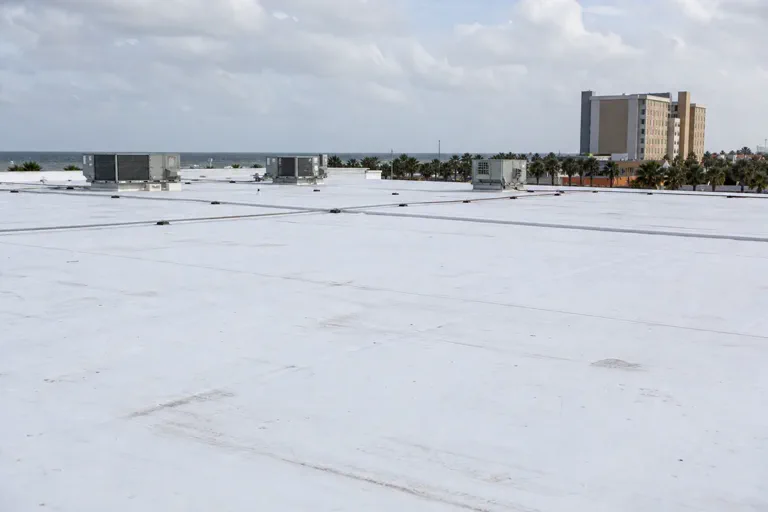
Repair or Replacement Scope

What Affects Repair, Coating, or Replacement Scope

Commercial roof pricing depends on the roof system, access, damage pattern, moisture conditions, drainage, material availability, building use, and how much work must happen around tenants or business operations. An isolated membrane puncture near an accessible roof area is different from widespread seam failure across a large low-slope roof. A coating evaluation is different from a tear-off. A wet-insulation concern is different from a dry surface repair. A generic price can mislead an owner when the roof condition has not been reviewed.

The useful cost discussion starts with the situation: active leak, recurring roof repair need, capital planning, sale, tenant complaint, storm documentation, or preventive maintenance. One problem area is different from a history of recurring issues. Rooftop HVAC units, parapet walls, skylights, drains, scuppers, gutters, solar equipment, heavy service traffic, business hours, tenants, customers, deliveries, worship services, warehouse operations, school schedules, or resident communication can all affect scope.

Material choice also matters. TPO, PVC, EPDM, modified bitumen, metal, built-up roof assemblies, and coating systems each have different repair methods and failure points. Surface prep, cleaning, heat-welded seam work, flashing, moisture review, drain correction, rust treatment, and safe access can all change the final scope. The first request only needs enough information to start the roof conversation. A full estimate should come from a roof-specific review, not from a generic headline or a caller guessing at the scope.

Property Types

Roofing for Property Managers and Commercial Building Types

A warehouse roof is not evaluated the same way as a restaurant, church, retail plaza, medical office, school, daycare, multifamily building, condo association, or industrial property. Warehouses often have large roof spans, skylights, loading docks, drainage concerns, rooftop equipment, and inventory protection issues. Retail centers may involve tenant disruption, customer areas, lease obligations, signage, and after-hours scheduling. Restaurants may have grease exposure, rooftop exhaust fans, HVAC units, and frequent penetrations. Churches, schools, and daycare facilities often need scheduling around services, events, students, and occupancy.

Building use changes the roof conversation. A leak over stored inventory has a different urgency than a stain in a hallway. A roof concern over electrical rooms, kitchens, offices, classrooms, retail sales floors, medical suites, resident units, or industrial equipment can change access and timing. Property managers can discuss documentation needs after the first call. Condo boards may need reserve planning and resident communication. Owner-operators may need a practical read on whether the roof sounds repairable, restorable with coating, or ready for replacement planning.

Daytona Beach and Volusia County have a wide mix of building ages and roof histories. Some older retail centers and churches have modified bitumen or built-up roofs with years of patches. Warehouses and industrial buildings may have wide low-slope areas, roof drains, skylights, equipment supports, and foot-traffic paths. Newer single-ply roofs may still develop issues around rooftop units, drains, parapets, or penetrations. Metal roofs may show fastener, seam, rust, sealant, or coating concerns after years of Florida heat and storms. The first call should help the owner describe those conditions clearly.

FAQs

Commercial Roofing FAQs for Daytona Beach Buildings

What type of commercial roofing services are commonly needed in Daytona Beach?

Commercial buildings in Daytona Beach and Volusia County often need flat roof leak review, TPO roofing repair, PVC and EPDM membrane evaluation, modified bitumen repair, built-up roof troubleshooting, metal roof leak review, commercial roof coatings, maintenance planning, and replacement planning. TPO, PVC, and EPDM single-ply systems are common on flat and low-slope roofs because they can perform well when seams, flashing, drains, and rooftop penetrations are maintained. Modified bitumen and BUR systems are used where multi-layer protection is needed. Metal roofing is valued for strength and longevity, but fasteners, seams, penetrations, and sealants still need attention.

When does repair make sense instead of replacement?

Repair may make sense when the issue is isolated, such as a small puncture, limited seam failure, minor flashing problem, localized storm damage, drain issue, or leak around one rooftop unit, and the surrounding roof still has useful life. Replacement becomes more likely when leaks are chronic, insulation is saturated, seams are failing across broad areas, the membrane is brittle or shrinking, ponding is severe, or multiple past repair areas are failing.

When can a commercial roof coating help?

A coating may make sense when the roof is mostly intact, leaks are limited and repairable, seams and penetrations can be reinforced, drainage is acceptable, and wet insulation is not widespread. Silicone and acrylic coatings require cleaning, surface preparation, adhesion review, flashing work, and repair of seams, laps, penetrations, and curbs before application. Coating should not be used to hide saturated insulation, major ponding, severe membrane deterioration, or a roof system that is past useful life.

Do I need photos or a full roof description before I call?

No. You can call or fill out the form with a short description of what changed. Photos, leak timing, affected rooms, tenant complaints, prior repair history, or roof access notes can help if you already have them, but they are not required before reaching out.

What is the difference between TPO, PVC, EPDM, and modified bitumen?

TPO and PVC are single-ply membranes that rely on welded seams and careful flashing around curbs, drains, penetrations, and rooftop equipment. PVC is often considered where grease or chemical exposure is a concern, such as restaurant roofs. EPDM is a rubber membrane where seam separation, shrinkage, punctures, ballast movement, and flashing failures can become leak sources. Modified bitumen is an asphalt-based system that may develop blistering, cracking, granule loss, open laps, punctures, and flashing deterioration as it ages.

When does a commercial roof need replacement instead of another repair?

Replacement may be needed when a roof has widespread seam failure, chronic recurring leaks, saturated insulation, severe membrane deterioration, major ponding problems, structural or decking concerns, multiple failed repair areas, or a system that is past useful life. A coating or patch can waste money if it only hides a roof assembly that is already failing.

Request Commercial Roof Help in Daytona Beach

Call or send a short note about what is happening. You do not need to identify the roof system, inspect the roof, or gather a complete scope before reaching out. Start with the symptom, and the next step can be discussed from there.

Call (386) 210-3505 for roof help